Guides & Technical Articles
How to Select ESP Fume Purifier & Right High Voltage Power Supply
Poor purification performance, frequent arcing and tripping in ESP fume systems are mostly caused by mismatched power supply and electric field, rather than insufficient electric field quantity.
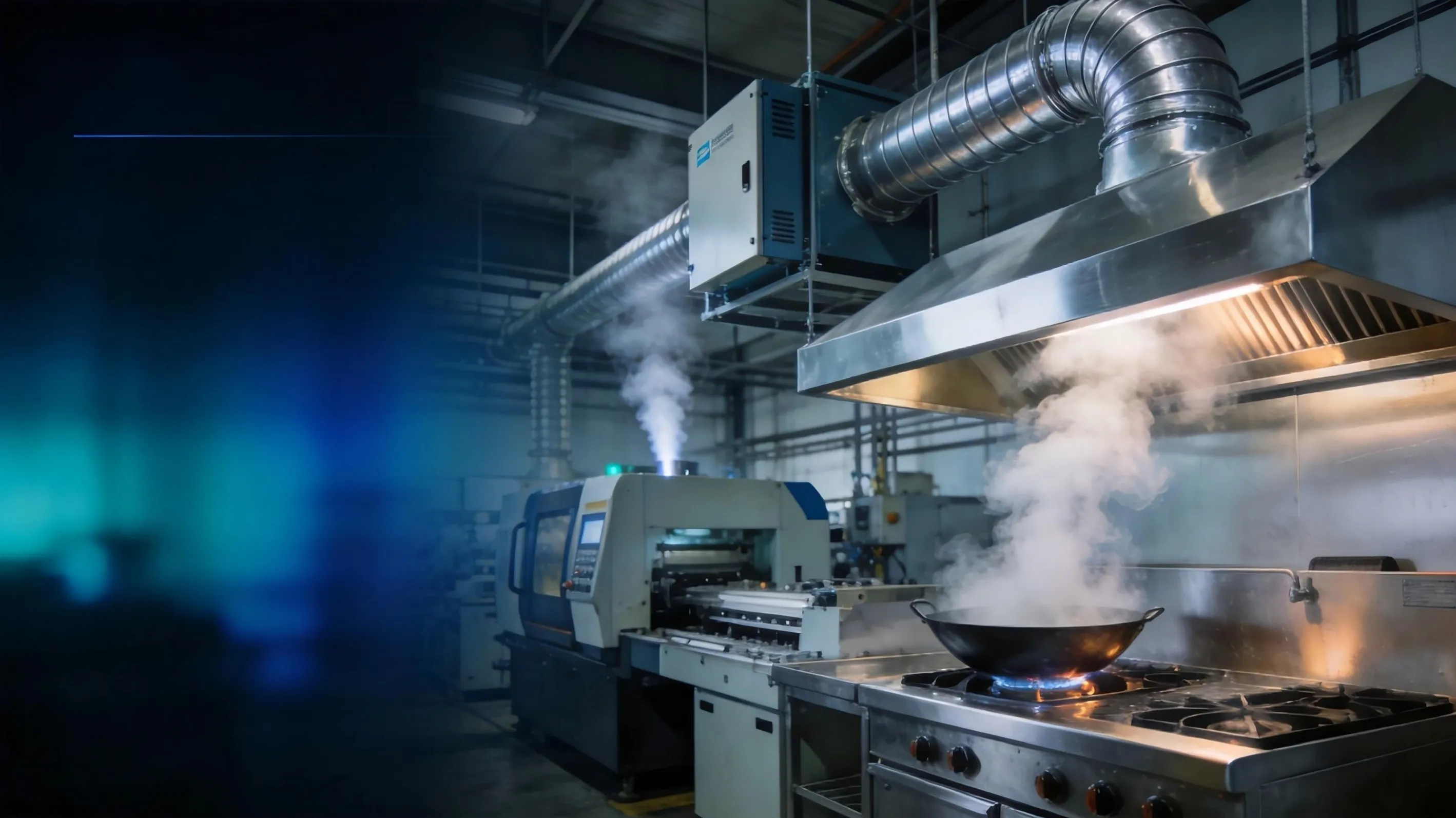
Poor purification performance, frequent arcing and tripping in ESP fume systems are mostly caused by mismatched power supply and electric field, rather than insufficient electric field quantity.
Step 1: Confirm working conditions first
- Air volume: Calculate exhaust air flow according to stoves. Reserve 10-20% extra margin. Higher smoke concentration (deep-frying, barbecue) needs enlarged air volume.
- Fume load: Light load for steaming & western food; medium load for regular Chinese cooking; heavy load for barbecue and frying. Heavy-duty scenarios require upgraded system specs.
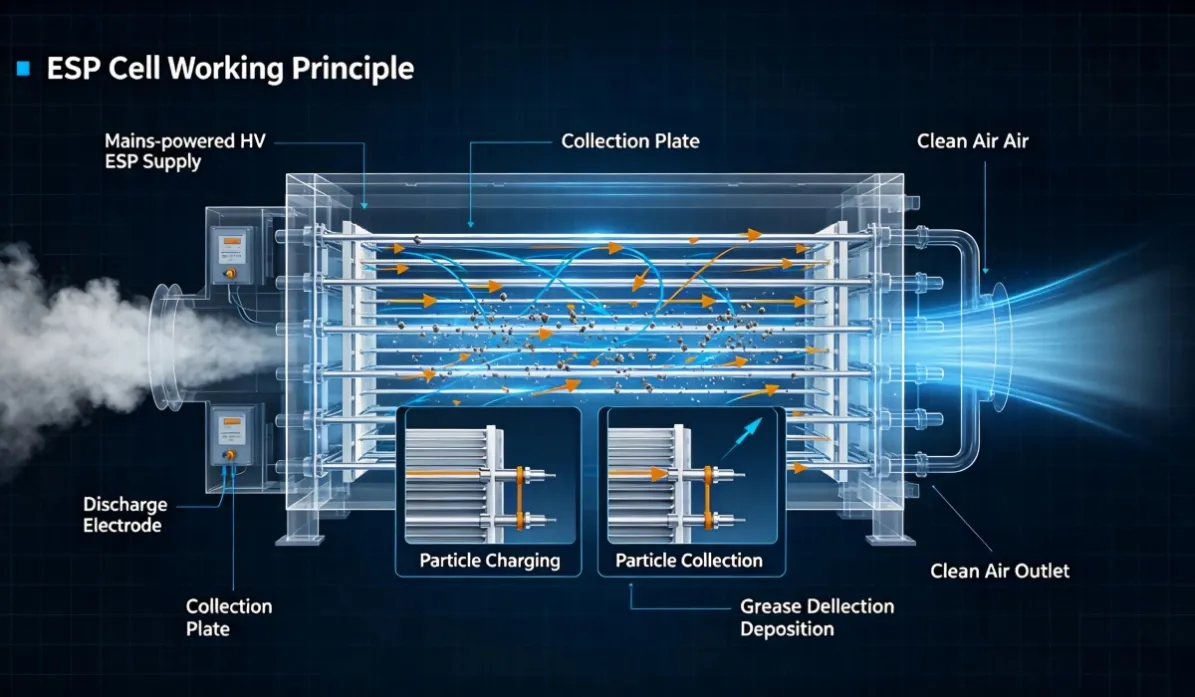
- Electric field myth: More electric field modules do not equal better efficiency. Blind stacking triggers heavy arcing and high failure rate. Prioritize effective collecting area instead of quantity. Distinguish between dual-stage (ionizing-collecting) and single-stage electric fields.
Step 2: Match proper ESP power rating
Key factors for power selection:
- Electric field specs: Dual-stage fields need dual-output power supplies. Larger collecting area & wider plate gap demand higher power and working voltage. Never mix incompatible power and field types.
- Real-world conditions: Add 20-30% power margin for heavy-smoke scenarios. High temperature and humidity increase arcing risks.
- Power supply functions: Must feature arc suppression, short-circuit, over-voltage & no load protection. Smart high-frequency power with auto-reset reduces unexpected shutdowns.
Wrong practices • Large electric field with low-watt power: Voltage cannot reach required level, leading to bad purification. • Small electric field with oversize power: Continuous arcing accelerates insulation aging.
Quick reference (for guidance only)
Air Volume(m³/h) | Suggested Power | Application |
4000 | 120--240W | Small restaurants |
6000--8000 | 240--420W | Regular kitchens |
10000--16000 | 420--640W | Canteens |
>20000 | 640--1000W | Large kitchen & industrial mist |
Practical tips
- Match output channels, voltage and power between power supply and electric field. Keep reasonable power margin.
- Regular electric-field cleaning is mandatory. Heavy oil buildup causes constant arcing even with correct power.
- Complete reliable grounding; avoid high-voltage no-load operation.
Conclusion
Selection logic: Define air volume & fume load → choose suitable electric field → match compatible high-voltage power. Neither excessive electric fields nor over-rated power guarantee good results. Only well-matched system delivers stable purification and low failure rate.