Guides & Technical Articles
How to Select the Right Power Rating for an ESP Power Supply
A well-matched power supply helps equipment manufacturers develop reliable ESP systems and enables maintenance companies to make more informed replacement decisions.
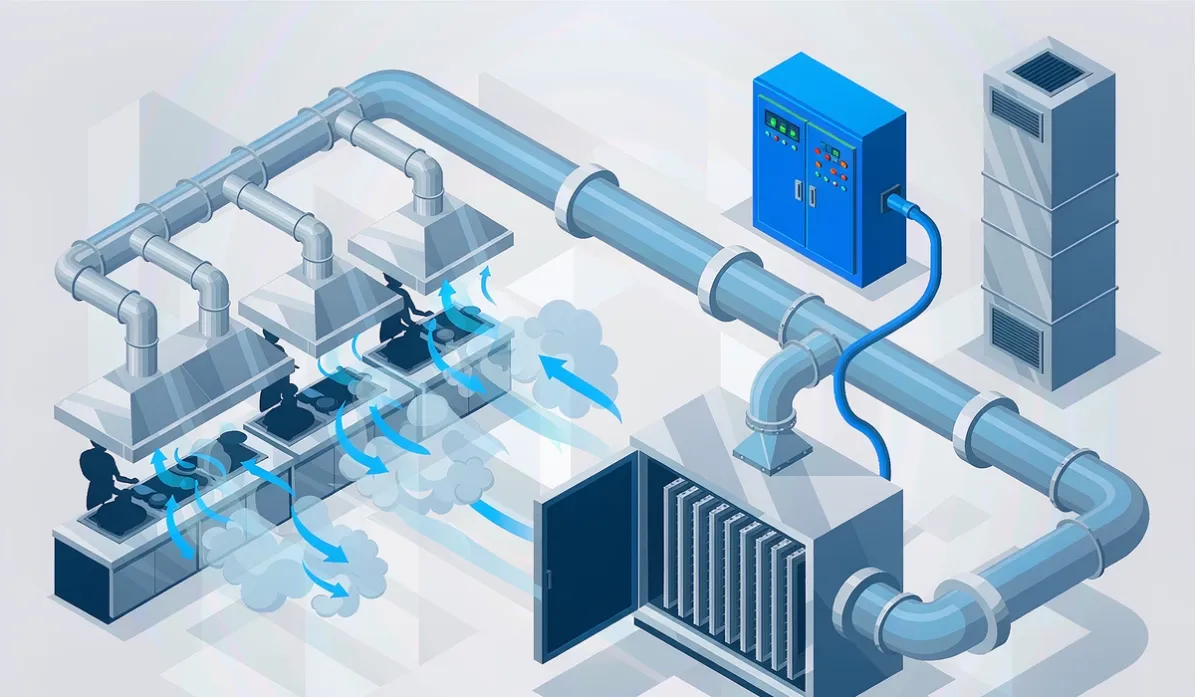
Selecting the correct power rating for an electrostatic precipitator (ESP) power supply is an important step in designing or upgrading an air purification system. A power supply that is undersized may not provide sufficient electrical energy for effective particle collection, while an unsuitable higher-power unit may create unnecessary electrical stress or compatibility problems.
For equipment manufacturers and maintenance companies, power rating should be evaluated together with the ESP cell, operating conditions and protection requirements.
1. Do not select a power supply based on watts alone
The rated power of an ESP power supply is commonly expressed in watts. However, the power rating does not tell you everything about its suitability for a specific ESP cell.
High-voltage output, current capability, voltage regulation, protection functions and operating characteristics all influence how the power supply performs.
For example, two power supplies rated at 500W may have different output voltage ranges, current limits and control methods. They may therefore behave differently when connected to the same electrostatic precipitator.
Before comparing models, confirm the electrical requirements of the ESP cell and the intended operating conditions.
2. Understand the relationship between voltage, current and power
Electrical power is calculated using the following relationship:
Power = Voltage × Current
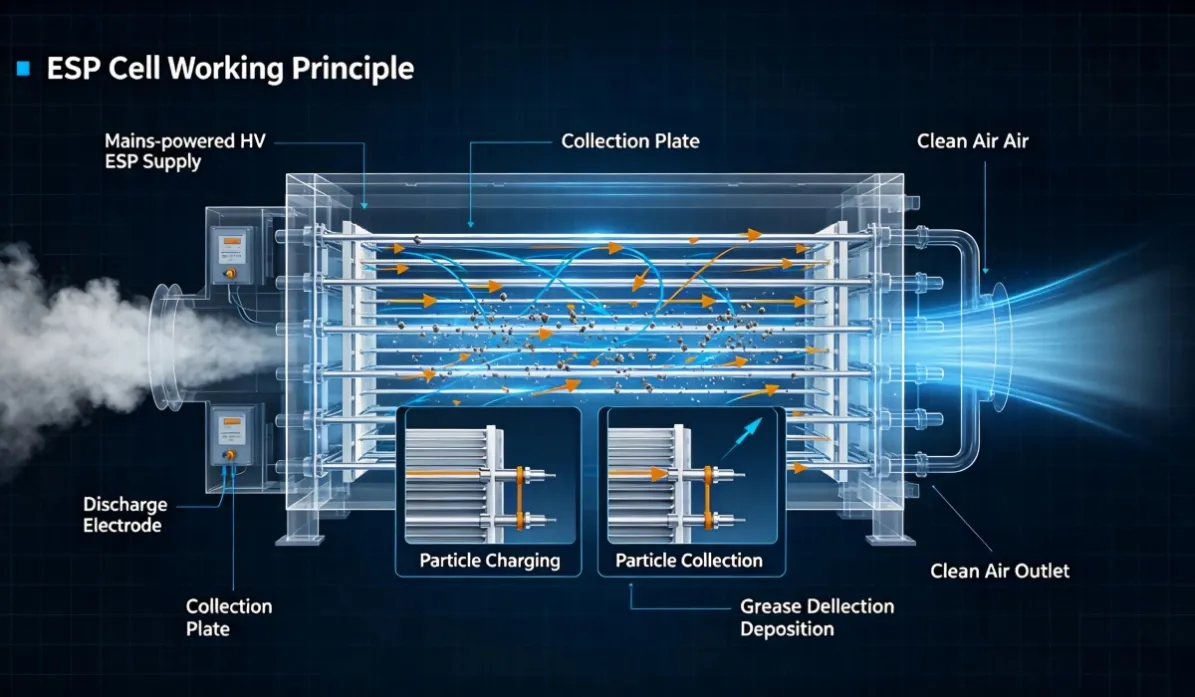
For an ESP system, the high-voltage output is used to establish the electric field required for particle charging and collection.
The actual voltage and current required depend on the ESP cell design, electrode spacing, contamination level, airflow conditions and electrical characteristics of the load.
A higher voltage does not automatically mean better purification performance. The operating voltage must remain within the limits of the ESP cell, and the system must be able to manage current and electrical discharge safely.
3. Consider the ESP cell's operating characteristics
Different ESP cells may require different electrical operating conditions.
When selecting a power supply, consider:
- The ESP cell's rated voltage and current.
- Electrode configuration and spacing.
- Cell size and construction.
- Expected contamination and operating environment.
- The number of ESP cells connected to the power supply.
- Whether the application is a new system or a replacement project.
The electrical characteristics of a clean cell may differ from those of a cell operating after extended use. Oil deposits, moisture, dust and other contaminants can influence electrical behavior.
4. Is a higher-rated power supply always better?
Not necessarily.
A higher power rating may provide additional operating capability, but it should not be used as a substitute for proper system design.
The power supply must be compatible with the ESP cell and its electrical limits. Excessive voltage or current may increase the risk of electrical breakdown, damage to components or unstable operation.
When upgrading from an existing unit, compare actual operating specifications rather than simply choosing a model with a larger wattage number.
5. What information should you provide to your supplier?
To help your supplier recommend an appropriate ESP power supply, prepare the following information:
- Existing power supply model and rated output.
- ESP cell dimensions and configuration.
- Required high-voltage output range.
- Operating environment and application.
- Whether the project involves new equipment, replacement or retrofit.
- Any existing electrical or protection requirements.
Photos of the ESP cell and existing power supply label can also help identify compatibility requirements.
Conclusion
Selecting an ESP power supply requires more than comparing wattage. Voltage range, current capability, ESP cell characteristics, operating conditions and protection functions should all be considered.
A well-matched power supply helps equipment manufacturers develop reliable ESP systems and enables maintenance companies to make more informed replacement decisions.