Oct 25, 2026Guides & Technical Articles
How to Replace an Existing ESP Power Supply Without Creating Compatibility Problems
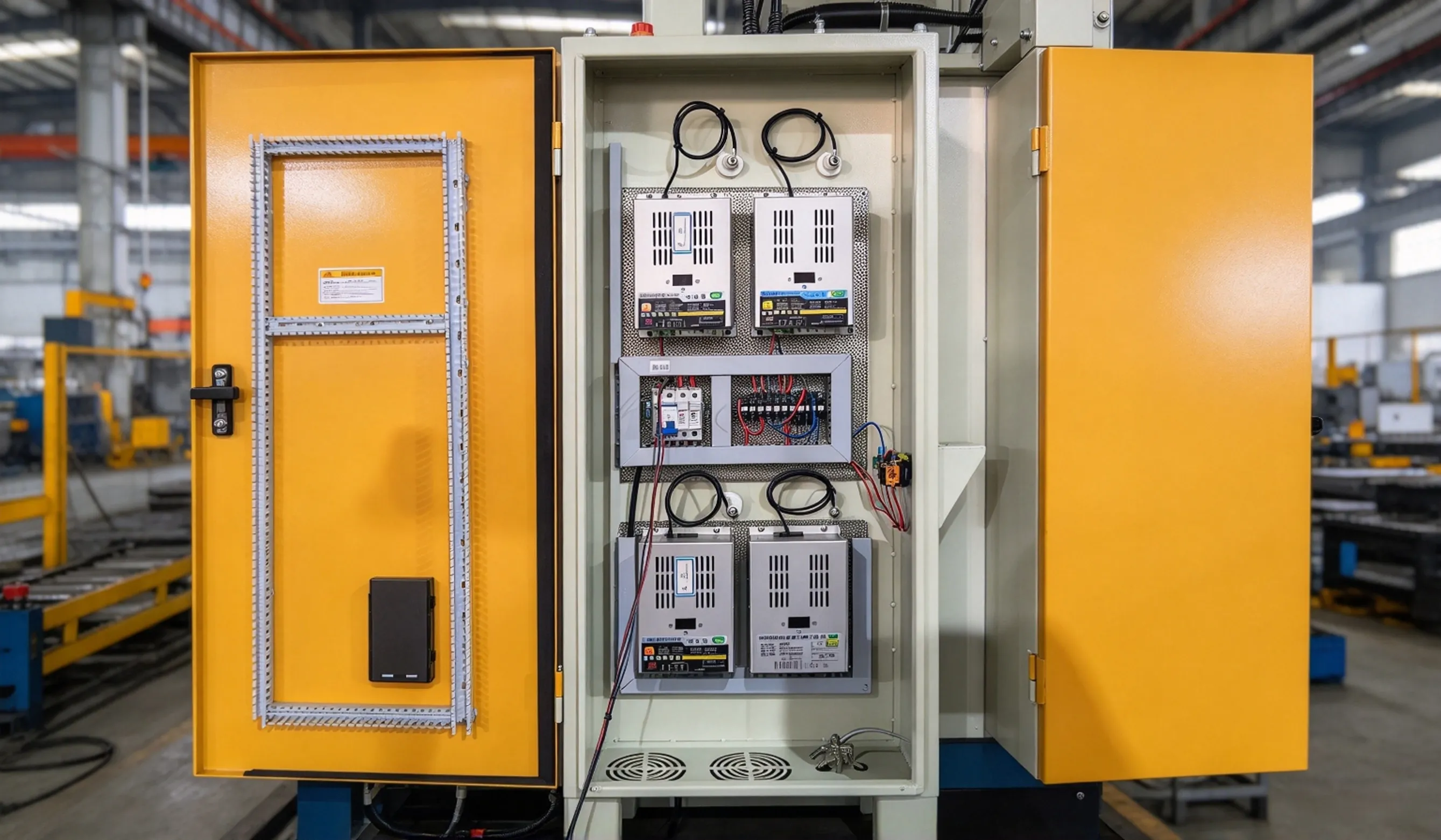
Replacing an ESP power supply can be more complicated than choosing a unit with a similar wattage. Two power supplies with the same nominal rating may differ in output voltage, control signals, protection settings, electrical connections or physical dimensions.
For commercial kitchen exhaust equipment manufacturers and maintenance companies, checking compatibility before purchasing can help prevent costly installation problems.
Step 1: Identify the Original Unit
Record the manufacturer, model number, rated input, output voltage, output current and power rating. If the original datasheet is available, use it as the primary reference.
If the label is incomplete or the model is discontinued, provide the supplier with the available documentation and photographs.
Step 2: Compare the Electrical Specifications
Check the following parameters:
- Input voltage and frequency
- Output voltage and current range
- Rated output power and operating limits
- Output configuration and polarity, where applicable
- Protection and control functions
Do not assume that similar voltage or wattage figures mean the units are interchangeable.
Step 3: Verify the Connections and Control Interface
Some ESP systems may use dedicated control signals, status outputs or external adjustment functions. The replacement must support the required interface if the system depends on it.
Confirm terminal assignments, connector types, cable requirements and any communication or remote-control functions before ordering.
Step 4: Check Mechanical and Environmental Compatibility
Compare the enclosure dimensions, mounting points, cooling requirements and operating environment. A replacement that fits electrically but cannot be installed or cooled correctly may not be suitable.
Consider the temperature, humidity, contamination and ventilation conditions specified by the equipment manufacturer.
Step 5: Confirm the Protection Requirements
The replacement should have appropriate protection features and operate within the limits of the ESP assembly. Verify the manufacturer's guidance for abnormal discharge, flashover, overload and other relevant conditions.
Never disable protection functions simply to make a replacement unit operate.
Step 6: Request Technical Confirmation
Send the supplier the original model number, datasheet, required quantity, application details and destination country. Ask for a written comparison of the original and proposed replacement specifications.
Any installation, commissioning or high-voltage testing should follow the equipment manufacturer's procedures and be performed by qualified personnel.
Conclusion
A reliable ESP power supply replacement depends on electrical, mechanical and functional compatibility—not wattage alone. A careful specification review before ordering can reduce avoidable sourcing risks.
MDL TEK welcomes inquiries from ESP equipment manufacturers, distributors and maintenance companies seeking high-voltage power supply options.